

Knowledge Base
Alexander Kamenetskyi
How to Launch a Sportsbook Website
View Details
May 28, 2026

Launching an online casino comes down to a handful of decisions made in the right order: market, licence, operating model, budget, technology, and controls. Regulators and payment partners assess the operation as a whole, so a gap at any stage can stop a launch even when each decision is sound.
This guide shows how the decisions connect and where those gaps tend to appear, so operators can close them before go-live.
Start with a narrow target market. Two questions matter here: is there a viable opportunity, and what kind of online casino could compete in it? Compare candidate markets on four points:
Next, define the audience through age, language, preferred games, device use, payment habits, and sensitivity to bonuses. Slot players, live casino players, and sports bettors behave differently. Treat each segment as a separate commercial case, with its own acquisition costs and expectations.
When analysing competitors in your chosen market, look for something they do poorly that you can deliver: a local payment method they lack, faster withdrawals, or an underserved game niche. Delivering on these gaps gives players a reason to switch, which is especially important in saturated, mature markets.
To get a glimpse of global market dynamics, Statista forecasts that the online gambling market will reach 1.1 billion users by 2030, with revenues expected to hit USD 717.06 billion.
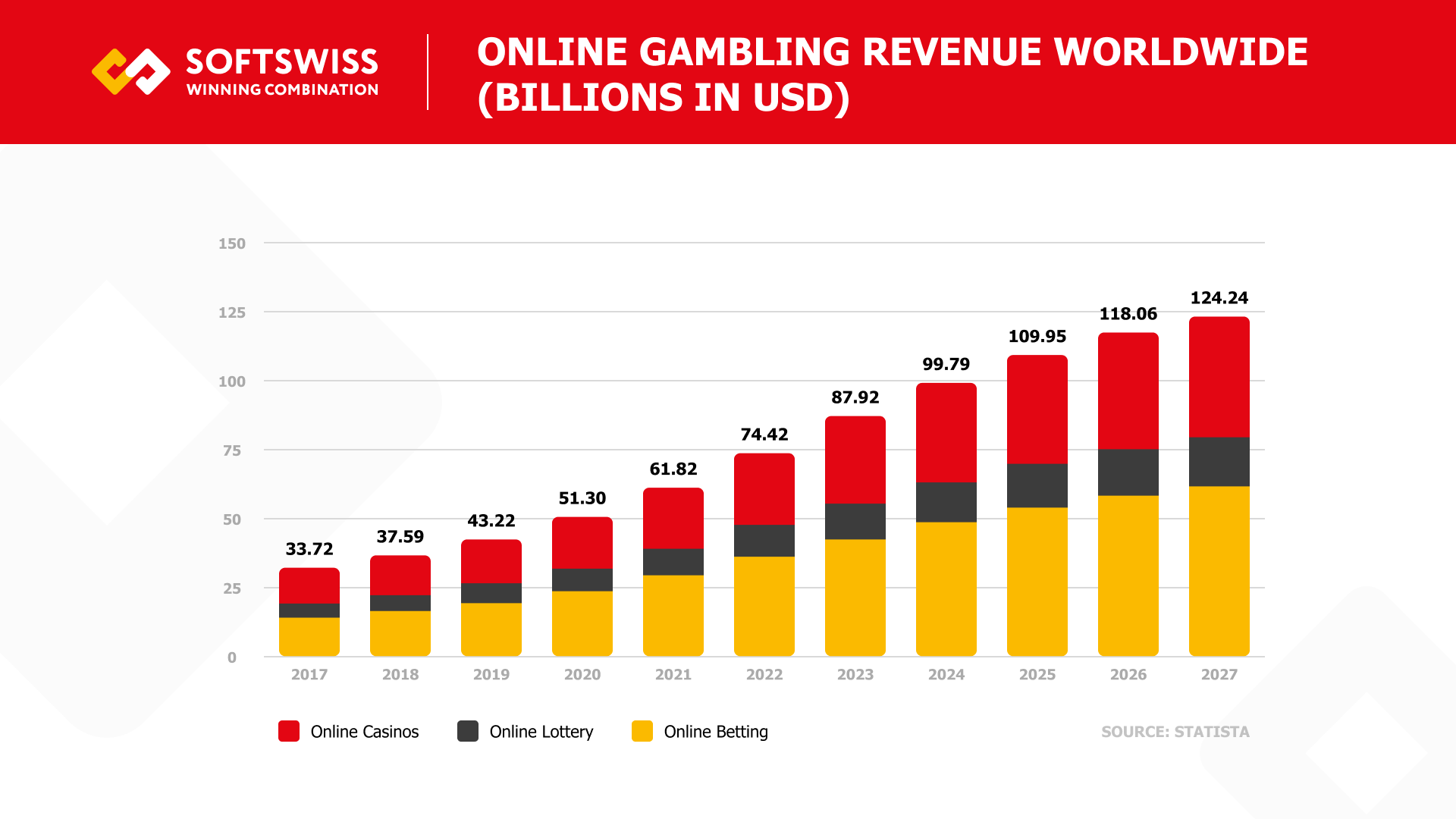
Treat the jurisdiction as both a commercial and a legal decision. The industry has moved from broad international licences towards country-specific regulation, which typically demands local presence, technical certification, advertising limits, and heavy player-protection duties. Assess each market on the legal status of online gambling, permitted gambling activities, the regulatory body, and tax treatment.
Then examine the licence itself:
Licence scope and requirements differ substantially across markets. For example, South Africa applies national legislation alongside provincial licensing, so you must assess both frameworks before committing. Spain licenses through a single regulator, but it is a compliance-heavy market, with tender periods, guarantees, and strict advertising rules. Rules change, so verify current requirements in the gambling regulation map.
Choose between a faster, supported launch and a model that offers more control but demands more resources. Whichever model you pick, the online casino remains your legal responsibility. The table compares the two common models on the same attributes.
In-house development requires engineering expertise, payment integration, and a dedicated technical support team. A turnkey casino solution removes that burden for operators who already hold their own licence, because the provider supplies the software, infrastructure, and support.
Depending on the jurisdiction, licensing requirements, and project scope, a turnkey B2B solution can cost €23,000–46,000 to set up and €500,000–1 million in the first year. An in-house platform, meanwhile, can incur more than €200,000 per jurisdiction annually in compliance costs, plus €180,000–300,000 for ongoing legal updates.
Budget for two separate things: what it takes to open an online casino and what it takes to run it for twelve months. A launch that looks affordable can still fail on year-one operating costs.
SOFTSWISS survey data show how operators typically allocate their budgets, and this is best treated as a planning benchmark rather than a universal formula. The largest pre-launch items include:
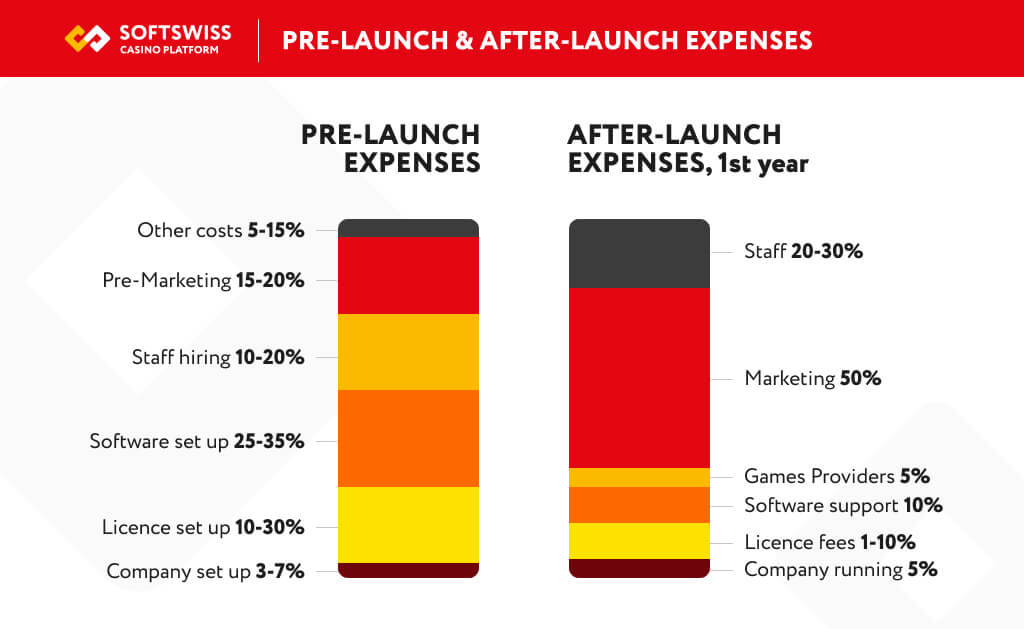
The breakdown below compares costs for a turnkey solution and in-house development.
These figures help operators compare their own plan with a market benchmark. They do not replace financial planning, but they do show where the biggest budget pressures usually sit and where extra headroom may be needed.
The Online Casino Cost Calculator turns these ranges into a plan tailored to your case.
Judge the online casino platform on whether it can carry a reliable launch and still fit the business in three years. Test scalability, reliability, security, mobile UX, reporting, and compliance capability. A serious platform is modular. The essential modules include:
Look for certifications such as ISO 27001 for information security and a testing lab certification for the software, such as GLI, BMM Testlabs, eCOGRA or Trisigma. For example, GLI-19 is a standard for interactive gaming systems. Then assess the provider and the product: reputation, experience in your jurisdiction, support hours, and commercial terms. The provider should also take responsibility for hosting, updates, and technical support after launch, acting more like a technology partner.
Price is where many operators go wrong. A one-off online casino script is cheaper on day one, but updates, hosting, certification, and compliance then fall on you, so the total cost of ownership often ends higher. Compare the initial price with the cost over the full life cycle, and read about what iGaming infrastructure involves before you decide.
Before signing, check the contract on five points:
Migration is the cost nobody prices at signing, and it decides how free you are later.
The platform must combine mobile experience, payments, and games into a single reliable journey, and each choice should be grounded in your audience research. A player who cannot verify quickly or withdraw reliably will not care how many games you offer.
The iGaming industry is mobile-first: phones and tablets account for more than 57% of revenue. Test the full journey on mobile and tablets, as well as desktop: navigation, registration, verification, deposits, gameplay, and withdrawals. Verification is where many journeys break, so make it fast without weakening controls. For practical tactics, see the guide to enhancing player experience.
Select the payment service provider for market fit and operational security. Compare:
The platform connects to the payment gateway, and the provider's fraud tools should flag suspicious activity. Selection is only half the job, however. Keep payments under control with transaction monitoring, which flags unusual activity for a named owner, and financial reporting, which matches every deposit, withdrawal, and refund against settlement reports.
Build for audience fit first, then variety, quality, certification, and localisation. Start with a limited number of established providers, and add localised titles and distinctive formats, such as crash games, to stand out. Certified random number generators (RNG) are the basis of fair play, and regulators expect proof. A game aggregator simplifies integration, while guides on the optimal mix of game vendors and casino game types help with engagement strategy.

Treat compliance as one connected process, not a set of separate checks. Most failures occur during handoffs, for example, when a payment alert never reaches the AML team. A workable flow looks like this:
Automated KYC, monitoring, and responsible gambling procedures are now a baseline for any licensed operator. What separates providers is reliability: how their tools perform under peak load, how consistently they meet requirements across different markets, and whether they prevent breaches rather than report them afterwards. Choose the provider that can prove all three.
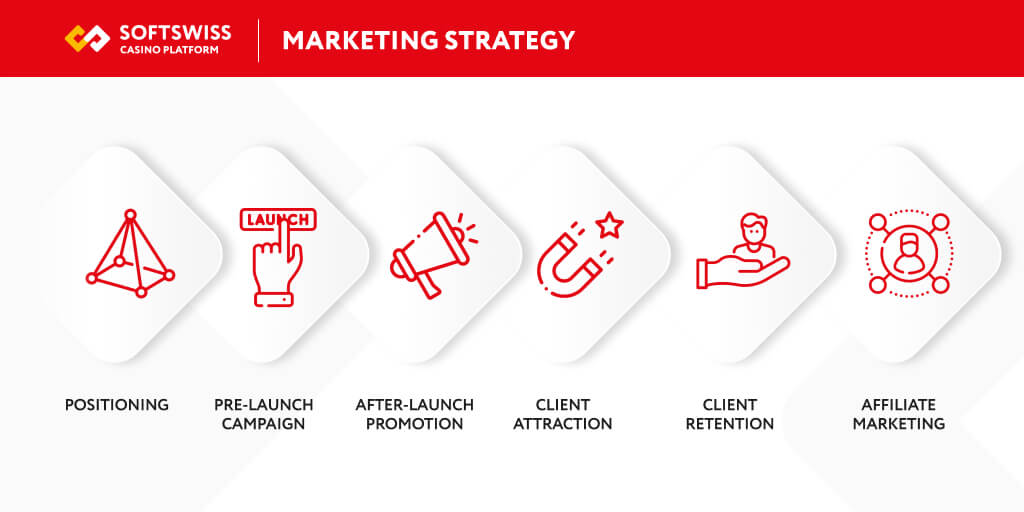
Build the marketing strategy around market fit, channel mix, and regulatory limits. Advertising rules and bonus restrictions decide which channels an online casino can use, so a plan copied from another market will fail. Combine paid, organic search, and partnership channels according to what is actually available.
Affiliate programmes are among the most established channels in iGaming. Partners reach players who already compare operators, and you pay for results rather than for exposure. That only holds when traffic quality can be tracked, so set the partner profile, commission model, tracking, and compliance rules first.
Close the loop with measurement. Track acquisition cost, conversion rate, retention, channel efficiency, and return on spend, then move budget towards what works and away from what does not. The guide to gaming KPIs lists the metrics worth watching.
Retention rests on three supports:
Plan the launch around dependencies. Starting an online casino typically takes several months to a year or more, depending on the launch model, licence route, and operator readiness. Some workstreams can run in parallel, while others block go-live.
Start the slow items early, test everything before release, and keep every operating function under review after go-live.

Expand your offering with a complete sportsbook solution designed to boost engagement.
SOFTSWISS offers a modular iGaming ecosystem that integrates easily with existing technology. The products include the Game Aggregator, Casino Platform, Sportsbook Platform, and Prediction Markets Platform, built with a focus on:
Talk to our team to plan your launch, and turn the decisions in this guide into a sequence you can act on.
In regulated markets, the operator must hold a licence for each jurisdiction where it offers gambling services. Requirements vary by market and may cover the operator’s corporate structure, key personnel, platform, games, payments and responsible gambling controls. Confirm the applicable licensing route before selecting target markets or planning launch.
Expect several months to a year or more, depending on the launch model, licence route, and operator readiness. Provider-side software set-up can take up to three months. Licensing, platform set-up, and payment integration can run in parallel, so prioritise the slow items, such as the legal entity and bank account.
Payment options should reflect player preferences, local regulations and the operator’s target markets. Common methods include cards, bank transfers, e-wallets, instant payments and vouchers; cryptocurrency may be available in some jurisdictions. A payment management process should include transaction monitoring and regular reconciliation of deposits, withdrawals, refunds and provider settlement reports.
The right model depends on an operator’s priorities, resources and growth plans. A turnkey solution can reduce the need to build and maintain core technology internally. An in-house platform offers greater direct control over the product and roadmap, but requires investment in technical, compliance and payments capabilities. Compare the costs, responsibilities and flexibility of each approach before deciding.
Before signing, check the contract’s core commercial terms, service scope and each party’s responsibilities. Pay particular attention to fees, service levels, data access and the terms for renewal or termination. These are starting points for review; the specific terms that matter will depend on your business and the markets you operate in.