

Knowledge Base
Alexander Kamenetskyi
How to Launch a Sportsbook Website
View Details
May 28, 2026

Launching an online casino means making a series of connected decisions – from choosing the target market and licensing route to setting up software, payments, game content and day-to-day operations. The right path depends on the jurisdiction, the level of control the operator wants to keep and how quickly the business needs to reach the market.
This guide follows that process step by step, showing what operators need to assess before launch and what still needs attention after go-live. It keeps the focus on the choices that shape launch speed, compliance and commercial fit.
One of the most important steps when launching your online casino business is proper, thorough planning. It is a great idea to write a detailed step-by-step business plan for a full year of operation.
It gives you a clear agenda and strategy, and it can also help reduce stress – it is much easier to complete one step at a time and track your progress instead of focusing on many tasks at once.
To start an online casino, operators need to:
Start market analysis with a narrow choice of target markets, not a general view of global growth. Compare geographic markets by licence availability, tax exposure, competition, payment habits, advertising regulations, and expected compliance work. Then define the target audience through player demographics, preferred devices, games, payment methods, languages, and bonus sensitivity.
This gives operators a practical basis for selecting the business model, shaping target market positioning, and estimating acquisition costs.
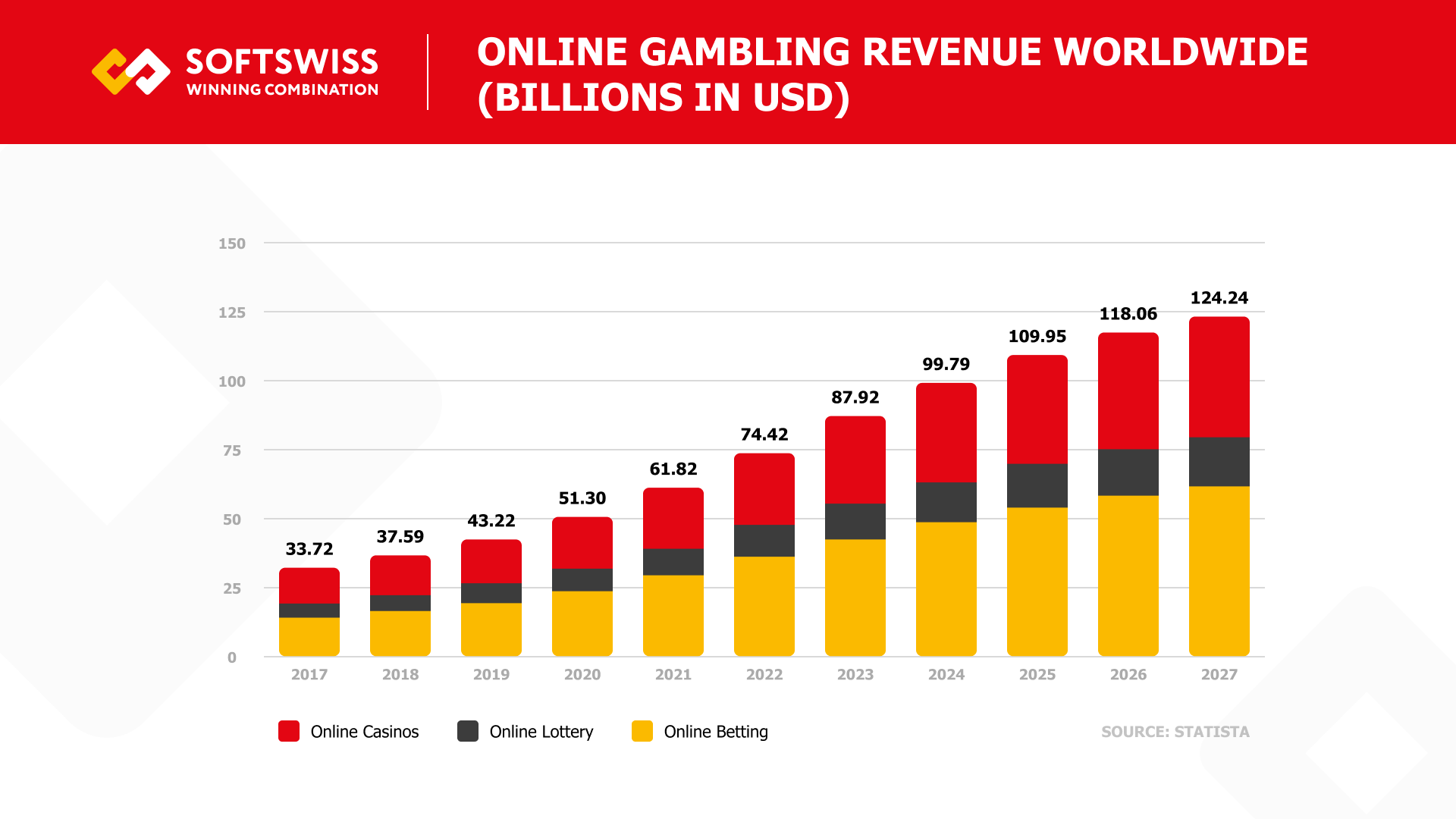
The online gambling landscape offers significant revenue opportunities, even in the face of global economic and political shifts. Online casinos also show to be superior in accessibility when compared to traditional, land-based casino experiences.
Supporting this view, Statista’s data forecasts a 1.1 billion-user expansion in the online gambling market by 2030, with expected revenues reaching USD 717.06bn.
Like brick-and-mortar casinos, online casinos need a licence. The key question is not just whether to apply, but which licensing route fits your business model, target markets and growth plans. iGaming operators typically choose between national and international licences, and each route affects market access, permitted products, fees, taxes, capital requirements, timelines and ongoing compliance.
In recent years, the industry has moved away from broad international licences towards country-specific regulation. For operators, this means the licence should be assessed as part of the wider launch structure, not in isolation. A jurisdiction may look attractive on paper, but still require substantial legal support, local presence requirements, technical certification or stricter responsible gambling obligations before the business can go live.
Licence costs vary widely. In some jurisdictions, the total investment is limited to application fees and basic legal work. In others, the real cost appears in the full launch structure – legal entity formation, tax exposure, capital or substance requirements, compliance preparation, technical audits and renewal obligations.
Depending on the jurisdiction, licensing requirements and project scope, a turnkey B2B solution can cost 23,000–46,000 euro to set up and 500,000–1 million euro in the first year. An in-house platform, meanwhile, can incur more than 200,000 euro per jurisdiction annually in compliance costs, plus 180,000–300,000 euro for ongoing legal updates.
Before applying, operators usually need to prepare ownership and source-of-funds checks, a business plan, KYC/AML policies, responsible gambling procedures and technical documentation. In practice, they also need a legal entity, a bank account and agreements with payment service providers to complete the financial and operational set-up.
The right software provider should support the relevant regulatory requirements in each target market, including reporting, player protection tools and any technical standards required by the jurisdiction.

Each jurisdiction has its own licensing authority, market-access route, and compliance rules. The following short country breakdown can help operators assess local specifics before entering the market.
At SOFTSWISS, we understand these complexities and offer tailored solutions. The Online Casino Platform comes in several packages:
Once the licence is granted, the work does not stop: reporting, audits, certification, annual fees and licence renewal become part of the ongoing operating model.
With these factors in mind, operators can compare specific markets by regulator and key launch considerations.
As any other web application, an online casino is powered by software. Many technology companies, SOFTSWISS among them, develop the software and systems that power an online casino. While searching for a reliable casino software developer, it is wise to evaluate the software from the point of view of your business requirements.
Besides providing an attractive casino frontend design and popular games for players, a quality casino product needs more than just great code. A truly robust online casino platform also has to be modular and adapt to different market requirements. Some of the mandatory casino software modules include components:
Regular software and game updates, hosting, and technical support must also be part of the provider’s package. Professional suppliers always take responsibility for the full technical support post-launch.
The software package that includes all of the above components might be higher in terms of costs, but modular software is a worthy investment. As a result, you get a reliable partner ready to support you during the whole project life cycle. Buying a cheaper solution, like a one-off casino script, might result in more spending in the future.
You can start your casino with a limited number of game providers, with a focus on games based on HTML5 technology. This technology allows users to enjoy rich graphics games and enhances the overall experience of playing casino games on mobile devices.
SOFTSWISS offers casino games integration with content from well-known providers, such as Evolution, Pragmatic Play, Games Global and more. Learn what the best casino games are for the markets you plan to work in.

A strong starting Game Portfolio should combine several content roles:
Slots, live casino, and table games cater to different player preferences, while distinctive or emerging formats – such as crash games, social play features, or hybrid game mechanics – can help the brand stand out and drive additional engagement.
Launching an online casino requires a payment processing setup that connects the casino platform, payment gateways, banks, and local payment methods into one controlled transaction flow. Start by mapping the payment preferences of each target market: cards, bank transfers, vouchers, electronic money, e-wallets, instant transfers, or crypto, where permitted. Then check whether the Payment System Provider supports the required currency options, geographic reach, settlement model, and high-risk processing rules.
Operator-side risk should be planned at the same time. A robust payment stack needs fraud-prevention tools, chargeback-handling workflows, and review rules for suspicious activity, so the operator can protect revenue and establish clear internal escalation steps for disputed payments or repeated failed attempts. Tools for reconciling deposits, withdrawals, and refunds are also essential, especially where multiple providers or currencies are involved. The right setup can reduce operational friction, support compliance requirements, and help the business scale across target markets without creating avoidable payment losses.
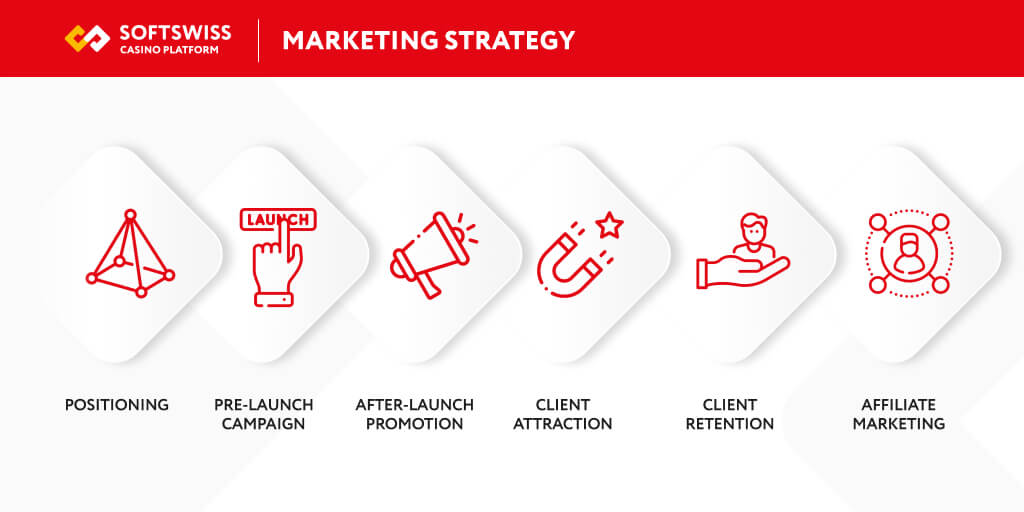
A casino marketing plan starts with choosing the target market and the player segments an operator wants to reach. From there, positioning shapes the value proposition, pre-launch activity builds awareness before go-live, and acquisition, affiliates and retention carry the plan into launch and beyond.
Regulation also matters, as advertising rules, market access and bonus restrictions can limit the number of channels that can be used – the aim is a plan that is practical, realistic and built around how the market actually works.
Gather a professional marketing team and develop a strategy for your goals (business, company, brand) and mission. Determine how you are going to be different from the competitors, what unique features your casino will have, and what steps you are going to take further.
Before you even start a casino, you need to advertise it to inspire your potential customers to wait for its launch; use all the channels at your disposal: affiliate networks, online ads, offline presentations, media publications, etc.
Pre-launch marketing should be chosen based on market fit, regulations, and budget. In some markets, affiliate networks, media publications and partnership activity can help build early visibility. In others, advertising restrictions may limit the available channels and make content-led or offline activity more useful.
Choose a mix of paid, organic, affiliate and partnership channels that match the target market. Paid activity can create reach, organic search supports long-term discovery, affiliates expand visibility in competitive markets, and partnerships can add local relevance. The channel mix should fit the market, the budget and the advertising routes that are actually available.
Develop contacts with affiliate partners, who can use their online resources to promote your online casino. Before launching an affiliate programme, prepare a clear structure, including the partner profile, commission model, tracking setup, reporting process and compliance rules.
Affiliate partners can extend reach through their own channels, but the programme only works well when performance and traffic quality can be tracked. An affiliate platform helps manage those relationships, monitor results and keep the channel under control.
Prioritise player experience. If navigation feels simple and players can quickly find how-to content, FAQs, demo versions and support, they are more likely to stay engaged after registration. Bonus policy and loyalty mechanics can then bring them back, while CRM-supported communication keeps the casino in front of them after the first deposit.
Measure marketing performance through acquisition cost, conversion rate, retention, channel efficiency and return on spend – those metrics show which channels bring value and which ones need adjustment. Budget allocation should follow performance, so you can scale what works and reduce spend where the return is weak. Over time, these insights feed back into the overall marketing strategy, keeping it aligned with how the market and player behaviour actually evolve.
The time it takes to launch an online casino depends on several factors: the launch model, the licence route, software setup, payment integration, and the operator's readiness to move.
In many cases, the full launch takes several months to a year or more, especially when licensing and market-entry requirements vary by jurisdiction. Provider-side software setup can take up to three months, and timely feedback from the operator helps keep that work moving. Licensing, platform setup and payment integration can often run in parallel, which is why operators with an existing licence usually reach the market faster.
Setting up a legal entity, opening a bank account and signing payment provider agreements have their own lead times, so starting these steps early helps keep the overall launch schedule on track.
Once the costs for legal matters, software, and marketing are defined, it’s time to plan your budget. The best option for startup companies is to set the budget at least for the first year of operation. Experienced companies can define their budget for several years in advance.
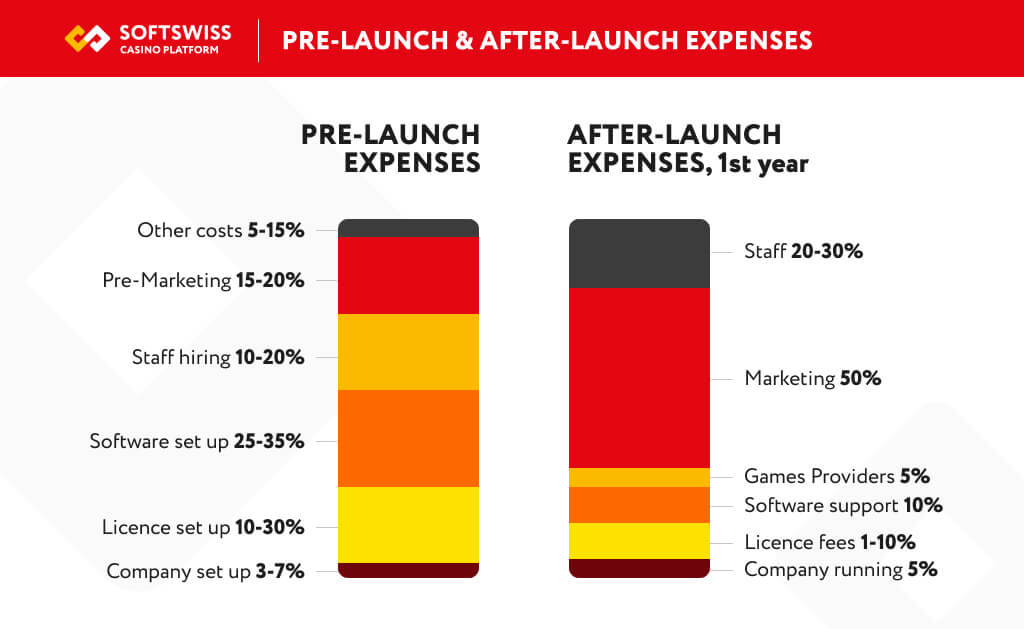
Opening costs cover the setup needed to go live, while operating costs cover the first year of activity after launch. Both matter because a launch budget on its own does not show the full financial picture. A clear plan should link budget, P&L and risk management, so operators can see what the project needs before they commit.
Pre-launch expenses cover everything required before going live. That includes:
The final cost depends on the jurisdiction, launch model, provider scope, customisation level, required integrations and the operator’s readiness. A straightforward setup in one market may stay relatively contained, while a more complex launch can quickly move into a much higher budget range.
SOFTSWISS survey data show how operators typically allocate their budgets, and this is best treated as a planning benchmark rather than a universal formula. The largest pre-launch items include:
These figures help operators compare their own plan with a market benchmark. They do not replace financial planning, but they do show where the biggest budget pressures usually sit and where extra headroom may be needed.
Opening the casino is only the first step – you also need a first-year operating budget to keep the business running after launch. That budget should cover marketing and player acquisition, platform fees, payment processing, compliance and reporting, licence-related obligations, player support, anti-fraud and risk monitoring, and technical operations and updates.
These costs are easy to underestimate because they build up over time. A launch may look affordable on paper, but the business still needs sufficient capacity to support traffic, manage payments, and meet ongoing regulatory requirements once players start using the platform.
A detailed budget is easier to build once those cost groups are separated. Operators can then compare the numbers with their own launch model and use the Online Casino Cost Calculator as the next step in financial planning.
Once the casino is live, the work shifts from launch to keeping the business running smoothly. Compliance still requires regular attention, especially regarding KYC, AML, responsible gambling, and reporting. After launch, payments become part of the day-to-day work, and even small issues with deposits, payouts, failed transactions or disputes can affect how players see the product. Support teams are usually the first line of contact for account questions, complaints, verification, and bonus queries, so they need clear processes and fast escalation when an issue requires another team.
On the technical side, the platform must remain stable, which means monitoring uptime, game performance, integrations, and updates, rather than treating launch as the final step.
Reporting brings all of this together – it shows:
In practice, post-launch operations are less about one big launch moment and more about small things staying under control day after day.
Additional features work best when they serve a clear business goal – some operators use them to support retention, others to widen the target market or add a new revenue stream. The right choice depends on regulation, market demand and the infrastructure already in place, because not every feature fits every jurisdiction or launch model.
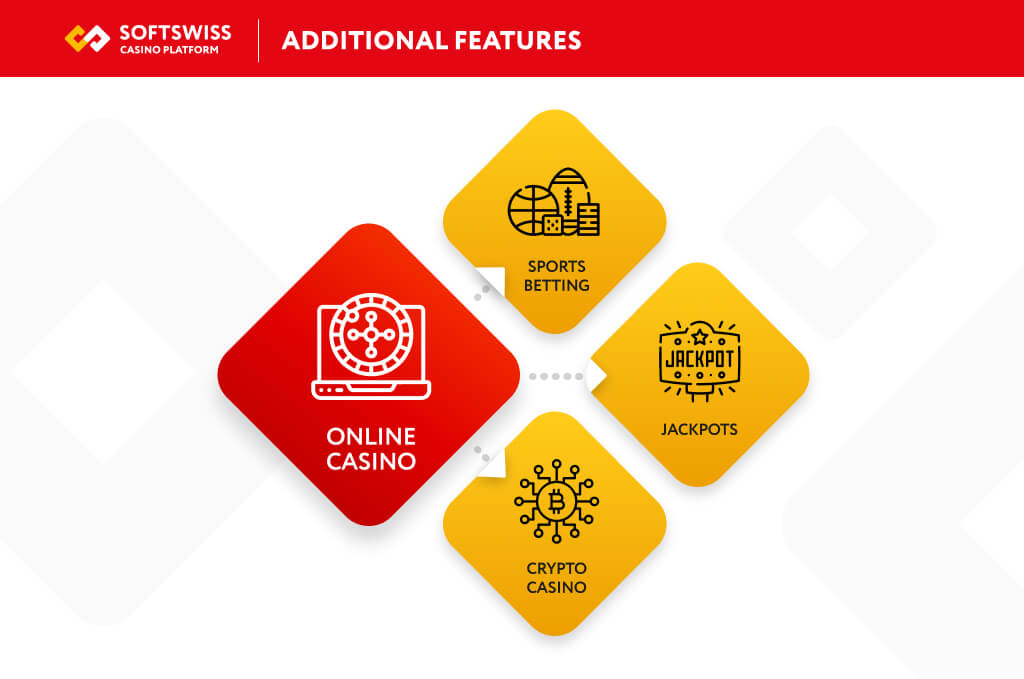
Crypto payment support is an expansion of payment options, not a separate casino model. It can make sense in markets where crypto payments are permitted and where players already expect them. The key question is whether the operator has the right payment setup, compliance process and transaction flow to support it properly.
Jackpots are a retention-focused expansion rather than a way to enter new markets. They make sense when the operator already has stable traffic and wants to increase repeat play, and when the game portfolio includes titles that support jackpot mechanics.
The result depends on the mechanics, the eligible games, the prize funding, the promotion behind the campaign and the way performance is reported. When those pieces fit together, jackpots can support repeat play and give the casino another reason to stay visible to players.
Operators can also combine them with wider casino gamification mechanics, such as achievement-based rewards, to extend the same engagement effect.
Sportsbook is an adjacent expansion for operators that want to add a betting vertical to their casino offering. It works best in markets where sports betting already has traction and where the platform can handle the extra layer that sportsbook integration brings, from risk management to player experience and reporting. In the right market, it can widen the offer and keep players engaged for longer.

Sports betting software platform for the modern player and the savvy operator.
SOFTSWISS focuses on developing innovative software for online casinos, providing a wide range of solutions from a robust Casino Platform, games hub, affiliate marketing software, and 24/7 support.
SOFTSWISS is all about:
The SOFTSWISS Casino Platform includes a variety of modules, features, integrations, and licence options.
The Casino Platform's dedicated back office with a set of innovative technologies gives you complete control over all areas of your online casino business. It is integrated with the SOFTSWISS Sportsbook, Game Aggregator, and Jackpot Aggregator, which can make your online casino stand out among competitors.
While the idea of starting an online casino can be appealing, it's vital to approach this decision with a realistic mindset. The iGaming market is dynamic and holds great potential, but it's also highly competitive. It's a hard truth that many projects in this field don't survive.
Embarking on this venture requires a sober assessment of your budget, experience, resources, market knowledge, risk tolerance and regulatory requirements. With thorough preparation and a strategic approach, you can increase your chances of successfully establishing your presence in the market.
At a minimum, the project needs someone to own the launch, a team to handle marketing, support, payments and compliance, and clear responsibility for retention and anti-fraud work. Some of these functions can be handled in-house, while others can be covered by a provider or external partner.
The traffic acquisition strategy is multifaceted and can include, but is not limited to:
In order to provide smooth and stable performance of your online casino, the software platform (backend) always resides on SOFTSWISS servers. The website itself (frontend) can be located either on your server or on ours.
Our casino solutions integrate with payment service providers such as Neteller, Skrill and Trustly, as well as region-specific providers such as Zimpler in Scandinavia and AstroPay in LATAM. Supported payment methods, including cards, bank transfer, e-wallets, vouchers and crypto, depend on the market, the jurisdiction and the operator’s agreements with each provider, as well as technical and regulatory requirements.
Our casino solutions integrate with payment service providers such as Neteller, Skrill and Trustly, as well as region-specific providers such as Zimpler in Scandinavia and AstroPay in LATAM. Supported payment methods, including cards, bank transfer, e-wallets, vouchers and crypto, depend on the market, the jurisdiction and the operator’s agreements with each provider, as well as technical and regulatory requirements.
Our software is delivered in English by default and is currently localised into more than 15 other languages, with more to come. Among such localisations are German, Spanish, Portuguese, Swedish, Finnish, Russian, Chinese, Japanese, Turkish, Indonesian, etc. However, website content should always be translated by casino operators.
Reliability of the software is reflected in uptime, scalability, security controls, technical support, incident handling and applicable certifications. Our product is certified by iTechLabs, one of the world's most reputable software certification agencies.