Casino Bonuses: What Online Casino Operators Should Know
Casino Bonuses: What Online Casino Operators Should Know
Updated: September 25, 2026
Online casino bonuses are marketing tools that help operators attract, convert, engage, and retain players. This article explains bonuses from an operator perspective: the main bonus types, their business purposes, the conditions that control cost and risk, and the role bonuses play in acquisition, retention, and lifetime value.
Marketing should be considered from the early stages of an online casino launch. Alongside licensing, platform setup, payment flows, game content, and acquisition channels, operators need a clear approach to bonuses and retention mechanics. For a wider view of launch planning, see the full guide on how to start an online casino.
What Are Casino Bonuses and How Do Operators Use Them?
While the concept may seem straightforward, bonuses play a much bigger role than simply offering extra value. Their design, purpose, and timing can significantly influence player behaviour and overall business performance. Understanding that purpose is key to using them effectively.
A casino bonus is a promotional tool used by operators to attract, convert, and retain players. It typically provides users with additional value, such as extra funds, free spins, or cashback, in exchange for registration, deposits, or gameplay.
For operators, bonuses are a strategic part of player acquisition and lifecycle management. When well-structured, they can increase engagement, extend session times, and boost lifetime value – but they must be carefully balanced to prevent bonus abuse and ensure sustainable ROI.
Main Types of Casino Bonuses
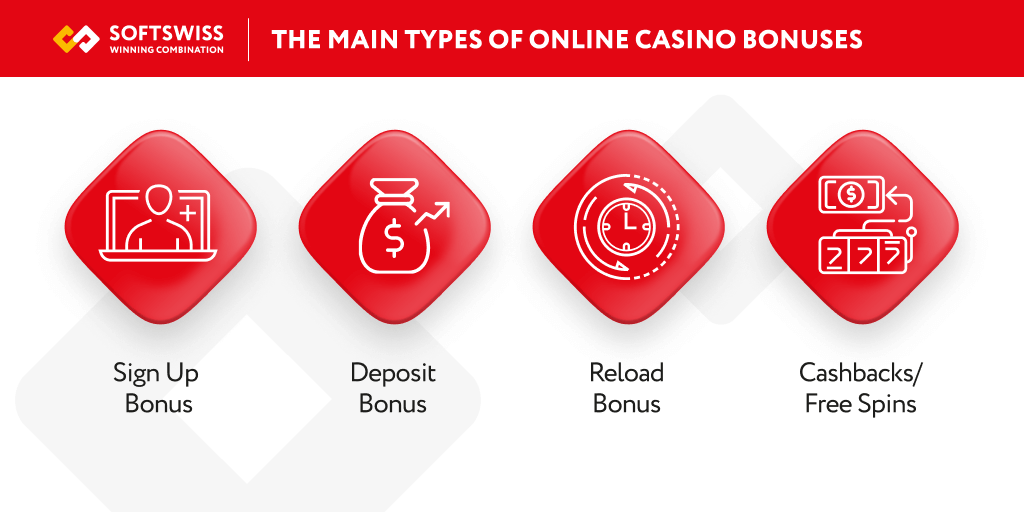
Bonuses can be very effective tools for steering player behaviour and moving players through the lifecycle funnel while optimising the operator's ROI. Each type of casino bonus helps operators address specific commercial challenges: attracting new users, converting registrations into depositors, increasing engagement, reducing churn, and protecting lifetime player value (LTV).
Depending on where a player is in their journey, promotional offers generally fall into five core categories:
Acquisition Bonuses
Conversion Bonuses
Engagement Bonuses
Retention Bonuses
Lifetime Value and VIP Bonuses
1. Acquisition Bonuses
At the acquisition stage, bonuses are used to strengthen market entry, generate qualified traffic, and support registration growth. Their main role is to create initial interest, introduce the casino experience, and drive traffic while keeping campaign costs and player quality under control.
No-Deposit Bonuses
No-deposit bonuses can reduce the barrier between registration and first gameplay because players can test the casino before committing funds. This mechanic is most useful when the objective is to activate new registrations, introduce the product experience, or support early-stage acquisition campaigns.
Referral Bonuses
Referral bonuses can support acquisition by encouraging existing players to bring new users to the casino, turning satisfied players into an additional source of traffic.
2. Conversion Bonuses
Once a user has registered, the next commercial challenge is converting interest into a First-Time Depositor (FTD). First deposit bonuses help reduce hesitation to make the first deposit by giving players a clear reason to make a first transaction.
Sign Up and Deposit Bonuses
Sign-up and deposit bonuses are usually the most visible offers designed to drive FTD conversion. A common structure is a flat bonus amount or a percentage match on the first deposit, sometimes combined with free spins.
For operators, the value of this bonus type lies in overcoming initial payment friction. The offer should create enough perceived value to support conversion without creating unsustainable promotional costs.
Deposit Match Bonuses
These bonuses can support both first-deposit and repeat-deposit motivation. A first-deposit match may be used to convert registrations into depositing players, while later deposit matches may support reactivation or repeat-deposit behaviour. In both cases, the bonus should be modelled against expected cost, wagering completion, eligible games, and projected revenue impact.
Crypto or Payment-Method Bonuses
Crypto or payment-method bonuses can support deposit optimisation when operators want to promote specific payment flows, improve transaction efficiency, or guide players towards methods that better fit the project’s operational model.
A robust, all-in-one solution for running online casinos.
3. Engagement Bonuses
Engagement bonuses help operators extend session length, promote selected games or providers, and encourage players to explore more of the casino product. These mechanics are especially useful when operators need to increase activity among registered players or direct attention to specific content.
Free Spins and Game-Specific Bonuses
Free spins are used to promote slot games, new releases, or selected game providers. They support game discovery and engagement but require clear rules on eligible titles, spin value, expiry date, and winnings conversion.
For example, a campaign may promote a new slot category, support a provider launch, or reactivate players who have shown previous interest in similar games. From an operator's perspective, free spins can also help diversify gameplay and introduce players to higher-margin content when the offer is aligned with the right segment and campaign goal.
Tournament Rewards
Tournament rewards create a competitive incentive to play and can focus activity on selected content without relying solely on deposit bonuses.
This format is especially useful for promoting new games, supporting seasonal campaigns, or increasing activity among already registered players.
Seasonal or Event Bonuses
Seasonal or event bonuses create short-term campaign momentum around holidays, sports events, product launches, or market-specific occasions. They can promote both acquisition and engagement when the offer is linked to a clear campaign period and a defined audience.
Event bonuses work best as part of a broader bonus calendar, not as standalone promotions. Each offer needs measurable targets and clear expiry rules to keep campaign exposure predictable.
4. Retention Bonuses
Retention bonuses are designed to reduce churn, maintain player activity, and address periods of inactivity or negative gameplay experiences. When triggered by clear behavioural signals, they make retention spend more targeted and reduce the cost of broad, untailored offers.
Reload and Cashback Bonuses
Reload and cashback bonuses usually serve a different purpose from acquisition offers. Both can support retention, but both also need margin control. Overuse can train players to wait for incentives instead of depositing organically.
Loss-Back Bonuses
These bonuses are primarily used for retention and VIP management, as they refund a portion of a player’s net losses over a defined period. Their main operational value lies in supporting continued engagement among selected segments.
However, this type of bonus needs careful commercial control. If the loss-back percentage is too high, the eligible segment is too broad, or the calculation period is too generous, the campaign can put unnecessary pressure on margin. Operators should define the qualifying period, eligible games, maximum return amount, and withdrawal conditions before launch.
5. Lifetime Value and VIP Bonuses
At the later stages of the player lifecycle, bonuses focus on long-term value rather than short-term activity alone. Loyalty and VIP mechanics help operators retain high-value segments, encourage consistent play, and build structured progression over time.
Loyalty Points
One-off bonuses can drive short-term activity, but loyalty points give operators a way to build ongoing value. Unlike one-off bonuses, loyalty mechanics can create a structured progression system that gives players a reason to return, play regularly, and move through different value tiers.
From a business perspective, loyalty points are useful because they can support retention without relying only on direct deposit incentives. Operators can connect points to gameplay, missions, tournaments, VIP levels, or personalised rewards. The system should still be monitored carefully to ensure that rewards remain commercially sustainable and relevant to different player segments.
VIP Bonuses
VIP bonuses are designed for selected high-value players and should be managed with a higher level of control than standard campaigns. They can support retention, relationship management, and long-term player value when they are based on clear segmentation and responsible gambling checks.
VIP rewards may include personalised bonuses, cashback, loss-back offers, exclusive tournaments, faster support, or tailored account management. The success of these campaigns depends on precision. Operators should avoid treating VIP bonuses as simply higher-value promotions and instead connect them to player value, risk profile, responsible gambling indicators, and long-term profitability.
Casino Bonuses By Lifecycle Stage
Acquisition
Conversion
Engagement
Retention
LTV & VIP
No-deposit bonus
Let new users try the casino before depositing
Sign up / deposit bonus
Encourage registration and first deposit
Free spins
Promote selected slot games or providers
Reload bonus
Re-engage existing players with a new deposit incentive
VIP bonus
Retain high-value players with tailored benefits
Referral bonus
Encourage existing players to bring new users
Deposit match bonus
Increase first or repeat deposit motivation
Tournament rewards
Increase engagement around selected games or time windows
Cashback
Reduce churn after loss periods and soften negative sessions
Loyalty points
Reward continued play and create long-term progression
Crypto/payment bonus
Encourage use of selected payment options
Loss-back bonus
Return part of net losses over a defined period
Seasonal or event bonus
Create short-term campaign momentum
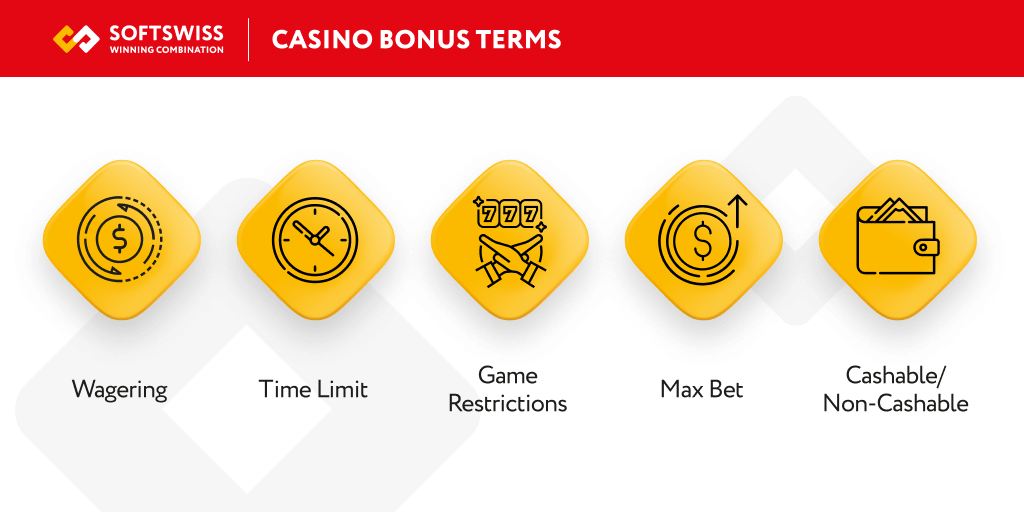
Casino Bonus Conditions
Bonus conditions define how a campaign works in practice and how much control the operator has over cost, risk, and player experience. The headline offer may attract attention, but the conditions help decide whether the bonus is commercially sustainable and clear enough to prevent disputes.
Wagering Requirements
Wagering requirements allow operators to choose when bonus-related winnings become withdrawable. This is an important tool for protecting margin and managing the real cost of a bonus campaign.
Minimum Deposit
Minimum deposit rules control the payment threshold a player must meet to qualify for a bonus. They help operators filter low-intent participation and connect the offer to a commercially meaningful player action.
Maximum Bonus Amount
Capping the bonus value keeps campaign exposure predictable. This is especially important for high-traffic acquisition campaigns, where an uncapped offer can create unnecessary financial liability.
Maximum Bet
A maximum stake limit reduces high-variance play while bonus funds are active. It helps operators prevent large-bet strategies designed to extract bonus value quickly or exploit the campaign structure.
Game Restrictions
Not every game should qualify for bonus play or wagering progress. Limiting eligible titles helps operators manage game-specific risk, especially when certain games have higher Return to Player (RTP), lower margin, or greater abuse potential.
Time Limits
A defined time window gives players clear rules for claiming, using, or clearing a bonus. It also helps online casinos manage promotional liability and avoid leaving old bonus obligations open for too long.
Cashable and Non-Cashable Rules
Cashable and non-cashable rules control whether the bonus amount itself can be withdrawn or whether only winnings from the bonus can be withdrawn. This condition defines the offer's real value and should be clear enough to prevent disputes or misleading expectations.
Payment Restrictions
Payment restrictions define which deposit methods qualify for a bonus. They help operators manage fraud, chargebacks, payment abuse, and operational risk linked to specific payment channels.
Jurisdiction and Eligibility
Bonus access should reflect the markets, account type, and applicable regulatory or internal risk rules. Clear eligibility logic keeps campaigns compliant with local requirements, responsible gambling standards, and market-specific restrictions while reducing the risk of inconsistent bonus application.
How Much Does the Casino Give Out in Bonuses?
Bonus spend can be substantial, especially during launch and early growth. A new casino may rely more heavily on welcome offers and deposit incentives because it needs to build awareness, registrations and first deposits quickly.
As the casino matures, the bonus strategy should become more selective. Instead of increasing promotional spend across all players, operators should shift towards segmented campaigns, retention mechanics and lifecycle-based incentives. The goal is not to give out less value at any cost. The goal is to give value where it supports measurable business outcomes.
Based on SOFTSWISS operational observations, bonus costs may fluctuate significantly depending on the month, market, project stage, seasonality, and new campaign activity. As a working average, operators may expect bonus spend to account for around 25–30% of Gross Gaming Revenue (GGR).
A practical bonus budget should account for:
expected bonus claims;
expected wagering completion rate;
game contribution and Return to Player (RTP) exposure;
payment and withdrawal behaviour;
fraud and multi-accounting risk;
campaign management costs;
player support and dispute handling;
incremental GGR, Net Gaming Revenue (NGR), and retention impact.
There is no universal benchmark that defines the correct share of bonus spend for every online casino. Operators should model bonus cost against their own margins, player segments, acquisition channels, and retention goals.
Casino Bonus Risks
A bonus strategy can support growth, but poorly controlled bonuses can damage margin, compliance, reputation and player trust. Operators should assess risk before launch, during the campaign and after the results are reviewed.
Financial and Margin Risks
A bonus that looks attractive in marketing can become expensive in operations. The risk increases when the bonus amount is high, wagering requirements are low, eligible games have high RTP, expiry rules are loose or abuse controls are weak.
A critical but often overlooked financial trap is the effect of bonuses on GGR. Because GGR is calculated as total bets minus total wins, wagers made with bonus money artificially inflate this metric. If platform fees, game provider royalties, or gaming taxes are calculated based on GGR, the operator ends up paying hard cash for revenue that was entirely funded by its own promotional budget.
Bonus Abuse and Multi-Accounting
Bonus abuse happens when players target promotional loopholes rather than using the casino as intended. Common patterns include multi-accounting, coordinated sign-ups, repeated use of payment methods or devices, low-risk wagering patterns and attempts to extract bonus value with minimal genuine play.
Operators can reduce these attempts through KYC checks, device fingerprinting, payment monitoring, account-link analysis, max-bet rules, game weighting and automated fraud triggers. These controls should be built into the bonus setup rather than added only after abuse appears.
Poor Segmentation
Mass bonuses are easy to launch but may prove to be inefficient later: they may reward users who would have deposited anyway, attract low-quality traffic or give the same incentive to players with very different value and risk profiles.
Correct segmentation makes bonuses become more useful. Operators can vary offers by player lifecycle stage, activity level, deposit history, preferred games, market, affiliate source or churn risk. However, segmentation also needs governance so that offers remain fair, clear and compliant.
Regulatory and Reputational Risk
Bonus rules differ significantly by jurisdiction, so operators should avoid building one global bonus template and applying it across every market. The safer approach is to treat each regulated market as its own compliance environment, with local rules covering bonus terms, advertising, eligibility, targeting, responsible gambling and player communications.
This is especially important for campaigns involving wagering requirements, cashback, VIP rewards, cross-product promotions, urgency mechanics, behavioural targeting, or affiliate advertising. A bonus that is commercially attractive in one market may be restricted, risky or prohibited in another.
Guide
Casino KPIs
Explore the next generation of KPIs enriched by advanced technologies like AI and ML – including financial, player engagement, and operational metrics.
How to Build an Effective Casino Bonus Strategy
An effective casino bonus strategy starts with a clear business goal: operators should decide what the campaign needs to achieve, then choose the bonus type, target segment, budget and conditions that fit that objective.
1. Define the Objective
Each campaign should have a primary intent. A welcome bonus may target first deposits. A reload bonus may target reactivation. Cashback may reduce churn after losses. A tournament may increase engagement with selected games.
If one campaign tries to solve acquisition, retention, VIP engagement and game promotion at the same time, its performance will be difficult to measure and its cost will be harder to control.
2. Map the Bonus to the Player Segment
Different players need different incentives. This means that a new registered user may need a first-deposit reason. An inactive player may need a limited-time reload offer. A high-value player may need a personalised reward that considers both commercial value and responsible gambling checks.
Segmentation should not only improve conversion, but also avoid unnecessary bonuses for players who are already likely to deposit or engage without an incentive.
3. Model the Bonus Economics
Before launch, operators should calculate the expected promotional cost and compare it with the expected incremental value. At minimum, this should include the bonus value, qualifying deposit, wagering requirement, eligible games, game weighting, expected completion rate and projected revenue impact.
A simple pre-launch model can prevent a common mistake: approving a bonus because the headline offer looks competitive, without understanding how it affects margin after real player behaviour is considered.
4. Set Clear Terms and Controls
Bonus conditions should be clear enough for players to understand and specific enough for operators to enforce. Ambiguous terms increase support tickets, disputes and compliance risk.
The terms should explain who is eligible, how the bonus is claimed, which games count, how wagering is calculated, when the bonus expires, what the maximum bet is and when winnings become withdrawable.
5. Monitor Campaign Performance
A campaign should be evaluated against business metrics rather than vanity metrics alone. Registrations, bonus claims and clicks can show interest, but they do not prove that the bonus created sustainable value.
Useful bonus KPIs may include:
KPI
What it shows
Bonus claim rate
How many eligible players accept the offer
First deposit conversion
Whether the bonus supports payment behaviour
Cost per depositing player
How much promotional value is spent per converted user
Wagering completion rate
Whether players clear the bonus or abandon it
Incremental GGR / NGR
Whether the campaign creates measurable value
Retention rate
Whether bonus users return after the campaign
Abuse rate
Whether the offer attracts suspicious or low-quality activity
Support tickets / complaints
Whether the terms are clear enough
6. Review and Adjust
A successful bonus strategy adapts and improves over time. Operators should review which offers attract valuable players, which segments respond without excessive cost and which conditions create friction or abuse.
Pro Tip: The strongest bonus systems are not the most generous by default. They are the ones that learn from campaign data and adjust value, targeting and conditions without damaging trust.
How SOFTSWISS Technology Supports Bonus Management
Once the operator has a clear bonus strategy, technology determines how precisely that strategy can be implemented. A platform should allow teams to configure campaigns, segment players, monitor performance and react quickly when a bonus creates unexpected cost or abuse risk.
The SOFTSWISS Casino Platform helps operators move from generic promotions to logic-driven bonus management. Its engagement and retention tools include bonuses, tournaments, and jackpots, supported by player account management, payment monitoring, anti-fraud workflows, and real-time reporting.
The platform uses an internal Domain-Specific Language (DSL) and Bonus API to automate real-time promotional logic and can trigger offers such as free spins, cash drops, or loot boxes when specific player conditions are met. This allows campaigns to be configured around player behaviour, value, risk, and lifecycle stage instead of broad one-size-fits-all promotions.
Built to process up to 7,000 requests and 100,000 database queries per second, with a 99.99% uptime guarantee and response times below 100ms, it supports campaign continuity during peak traffic, when bonus mechanics, payment flows, and player activity need to work without disruption.
Centralised analytics allow operational teams to monitor bonus usage, adjust prize pools, control promotional exposure, protect GGR, and evaluate whether each campaign supports measurable business outcomes.
For operators, the practical value is control: bonus spend becomes easier to track, campaign rules become easier to adjust, and promotional activity can be managed as a performance-driven investment rather than a fixed cost.
Conclusion
Casino bonuses can help operators attract, convert and retain players, but only when they are designed as part of a controlled business strategy. The key is to connect each offer to a lifecycle stage, define the right conditions, model the expected cost, prevent abuse and measure performance after the campaign ends.
A strong bonus policy gives the right incentive to the right segment, under clear rules, with enough control to protect both the player experience and the operator’s position.