Disclaimer: This article provides general information with steps on how to start a crypto casino and does not constitute legal or regulatory advice. Gambling and crypto-asset rules vary by jurisdiction and may change. Operators should obtain advice from qualified legal and compliance professionals before proceeding.
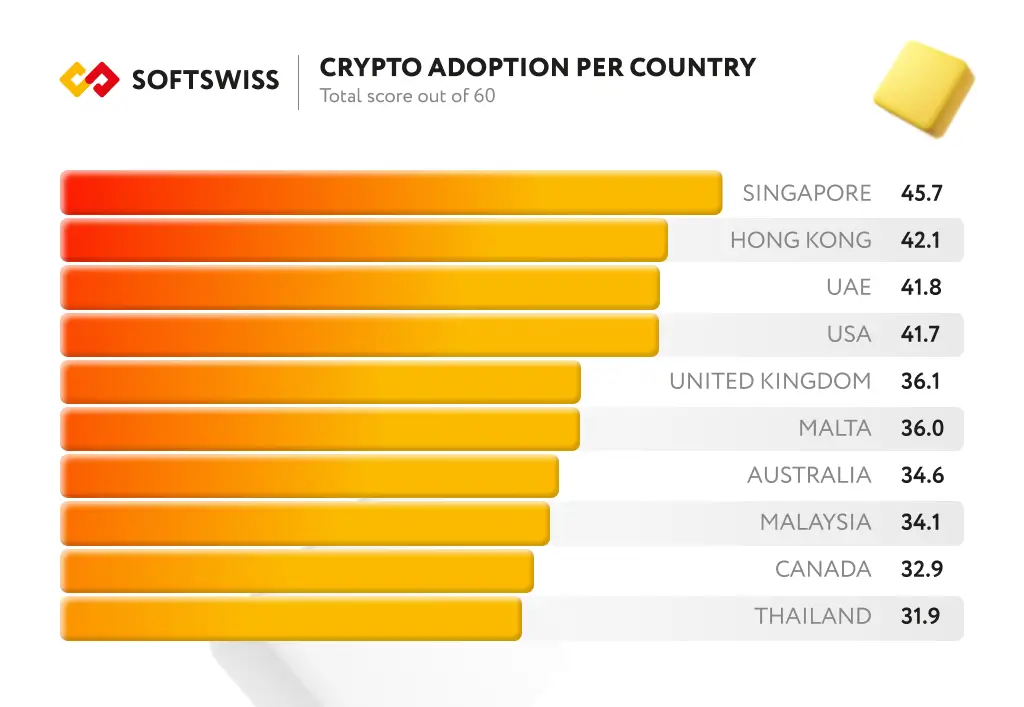
The iGaming industry and the cryptocurrency market are in continuous growth, and both have been following a similar path since they became established in the digital economy. As digital assets become more widely used for online payments, more entrepreneurs are exploring how to launch a crypto casino and serve players who prefer cryptocurrency.
However, starting this type of casino requires more than just accepting Bitcoin payments. Operators need the right business model, payment infrastructure, technology platform, and compliance framework, and most importantly, it starts with choosing the right jurisdiction. This guide explains how to plan, build, and launch a successful crypto casino.
1. Select a Gambling Licence and Jurisdiction
In the early 2010s, Bitcoin entered the scene and started to gain popularity. Crypto casinos appeared soon after, and Bitcoin became known as a new way to make online payments. They attracted attention because players could deposit and withdraw digital assets without using traditional banks or cards. At that time, however, dedicated rules for crypto gambling were limited, and many operators served international users without clear market-by-market guidance.
The landscape is quite different today. Regulators are strengthening requirements for gambling licenses, AML controls, player protection, and payment transparency. Operators should therefore start by confirming the jurisdiction and whether cryptocurrency gambling is permitted in their target markets and under what conditions.
Some regulated markets may permit crypto payments under specific conditions, while others may restrict them. Understanding these requirements early helps operators avoid building a business model, payment setup, or technology platform that cannot legally operate in its chosen markets.
Agambling licence is a permit issued by an authorised body in a country or territory and it’s what allows an online casino to offer gambling services legally. It’s an essential step, not just for compliance, but also for gaining player trust. However, cryptocurrency rules can change, and a licence that permits online gambling does not necessarily permit crypto payments.
Before choosing a jurisdiction, look at:
Market access: permitted countries, player segments, and restrictions
Crypto compatibility: rules for digital assets and the proposed payment model
Application requirements: ownership, financial, technical, and key-person documentation
Approval timeline: application, technical review, and certification stages
Total cost: application and annual fees, taxes, professional advice, audits, and compliance operations
Ongoing obligations: KYC, AML, responsible gambling, reporting, and regulatory communication.
Comparing Licences
Isle of Man – The Isle of Man does not issue a separate crypto licence, but its online gambling framework permits several virtual-currency models with prior approval. These include crypto-to-crypto gaming, peer-to-peer crypto gaming, and crypto-in/crypto-out gaming against the house. Applicants must meet enhanced AML requirements, use blockchain analytics, and complete source-of-funds checks. Crypto-in/fiat-out payments are not permitted. Operators must also establish a genuine local presence, including an Isle of Man company, local personnel, and approved infrastructure. The application fee is£5,000 (around EUR 5,800), including a non-refundable upfront fee of £1,000 (around EUR 1,200). The annual licence fee is £35,000 (around EUR 40,800), excluding taxes, professional fees, and operating costs.
United Kingdom – Operators serving customers in Great Britain need a UK Gambling Commission remote casino operating licence. Although the framework does not expressly prohibit crypto payments, they are not currently a standard feature among UK-licensed operators. Any operator considering this model must notify the Commission and demonstrate appropriate AML, source-of-funds and player-protection controls. Licence fees depend on gross gambling yield, starting from approximately £4,224 (around €4,900) for the application and £4,199 (around €4,900) annually for the lowest fee category.
Curaçao – the remote gambling jurisdiction offers a B2C online gambling licence that can support crypto payments under its 2026 crypto policy. Operators need to prepare a crypto policy, assess the risks of each asset, monitor transactions, and apply enhanced AML controls. The operator cannot provide exchange, wallet or VASP services. SOFTSWISS estimates the first-year licensing cost at approximately €55,000 or more.
Anjouan – Anjouan offers B2C online gaming licences for operators. Its current framework includes cryptocurrency-enabled gaming and blockchain-based gaming among the permitted activities. Operators must confirm that their planned assets, payment flows and target markets are covered by the licence. The published B2C licence fee is €17,828, with the same amount payable for annual renewal. Additional domains cost €500 each.
Licensing Requirements to Prepare for
Although requirements vary, applicants should expect to provide information about the business, its owners, management, finances, and technology. Typical preparation includes:
Source-of-funds documentation
A business plan covering markets, products, payments, and responsible gambling
KYC, AML, and customer risk policies
Technical architecture, security measures, wallet, and transaction controls
Reporting, audit, and incident-response processes
2. Create the Crypto Casino Business Model
The next step would be to decide whether operators want a crypto-only casino or a hybrid casino that accepts both cryptocurrency and fiat. This choice depends on the target audience, payment infrastructure, compliance setup, marketing strategy, and expected revenue. Here is a breakdown of the main strengths and advantages of each model.
Model
Main strengths
Main considerations
Crypto casino only
Clear positioning, crypto-native user experience, and a focused payment proposition
Smaller audience, greater exposure to crypto volatility, more specialised acquisition, regulation and compliance
Hybrid crypto casino
Wider market access, more flexible cashier, and the ability to serve both crypto-first and conventional players
More complex payment, currency conversion, and compliance operations
– real-money gambling licensing requirements
Within a hybrid build, there is still a choice: designing crypto as a core segment from the outset (its own bonuses, wallet UX, and marketing) versus an existing fiat casino. This adds crypto as one more payment option on top of its current brand.
3. Do the Market Research
Market research is the foundation on which the rest of the plan rests. Before launching, operators should have clear answers to:
Player behaviour: Which cryptocurrency do players prefer? How often do they deposit and withdraw?
Competition: Which brands already serve the market, what payment methods do they support, and how do they differentiate their game portfolio or bonuses?
Acquisition: Can the operator reach crypto players through marketing initiatives such as affiliates, communities, search, content, partnerships, or paid media permitted in the target market?
Unit economics: Can acquisition costs, payment fees, game costs, bonuses, compliance, and support be covered financially?
Operational capability: Does the team understand gambling compliance, crypto payments, wallet management, treasury controls, and player support?
This research helps the operator define a clear value proposition and determine whether the proposed crypto casino model is commercially and operationally suitable for the target market.
*Values are subject to change.
4. Plan the Crypto Casino Budget and Launch Timeline
A crypto casino budget should cover the entire first operating year, and not only the licence and website.
These are the main cost groups to keep in mind:
Cost group
What to include in the plan
Licence and legal
Application, professional advice, corporate services, regulatory fees, and local legal review
Crypto casino platform and integration
Casino platform, configuration, development, integrations, hosting, security, and testing
Games
Game content, aggregation, certification, jackpots, live casino, and localisation, where applicable
Payments
Processor setup, transaction fees, conversion, wallet controls, liquidity, and reconciliation
Compliance
KYC and AML tools, sanctions screening, monitoring, reporting, audits, and compliance personnel
Brand and acquisition
Research, design, content, affiliates, media, bonuses, partnerships, and optimisation
Operations
Customer support, finance, fraud prevention, responsible gambling, and technical maintenance
Reserve
Liquidity, unexpected compliance work, security incidents, volatility, and slower-than-expected acquisition
There is no universal startup cost for a crypto casino. The total depends on the jurisdiction, target markets, degree of customisation, game portfolio, payment model, and whether the operator already has staff, a brand, and compliance infrastructure.
Crypto Casino Budget Benchmarks
SOFTSWISS survey data show how operators typically allocate their budgets. This is best treated as a planning benchmark rather than a universal formula. The largest pre-launch items include:
25–35% of pre-launch spending
15–20% for marketing
10–30% for licence acquisition
These figures are general planning benchmarks, not a fixed cost model for every crypto casino.
Tip: Covering the first year may require an initial investment starting from approximately €1 million. The SOFTSWISS Online Casino Cost Calculator can be useful in generating an estimate for online casinos, and while it’s not specific to crypto, it can help you get a sense of the budget. The calculator also includes software, website development, marketing, staffing, payments, games, taxes, compliance, and bankroll costs.
5. Choose the Crypto Casino Platform
The crypto casino platform should support the operator’s licence, markets, currencies, games, payment flows, and risk controls from the beginning. It is the cornerstone for the project’s operation and success. To deliver excellent service to users, it must meet several requirements.
At a minimum, the software should provide:
Player account management and secure authentication
Casino lobby, game configuration, bonus, and promotion tools
Integration with a game aggregator and individual providers
Multi-currency balances or reliable in-game conversion
Crypto payment processing and transaction-status monitoring
KYC, AML, sanctions, and responsible-gambling integrations
Fraud controls, limits, player segmentation, and risk workflows
Reporting for finance, compliance, marketing, and customer support
Wallet, treasury, and reconciliation controls
Localisation, mobile responsiveness, and availability in the target markets
The operator should also confirm that the platform can handle any issues that may arise, such as delayed confirmations, unsupported assets, funds sent through the wrong network, and withdrawals that require manual review.
It’s therefore important for the operator to have support teams set up to handle these types of issues. Teams should have clear escalation procedures, defined response times and access to the transaction data needed to investigate and resolve each case.
Understand the Technical Models
Just because a casino uses crypto doesn’t mean it runs on a blockchain. In fact, most crypto casinos don’t. In a standard crypto casino, the player deposits cryptocurrency into an account, while the platform records the balance and reflects it in-game.
Traditional crypto casino: A traditional crypto casino uses a standard online casino platform with integrated crypto payments. It may convert a player’s crypto balance for wagers in games that do not natively support cryptocurrencies. The platform usually has all the features of a real-money gambling online casino, such as player account management, balances, games and reporting. This is the model supported by the SOFTSWISS Crypto Casino Solution.
Blockchain casino: A blockchain casino operates on a blockchain network, meaning that all aspects of its operation, including deposits, withdrawals, and bets, are recorded on a public or private blockchain. These casinos leverage blockchain technology's transparency to ensure game fairness and transaction integrity. Players typically do not need an account to play at these casinos. Instead, they can connect their crypto wallet directly in-game, while winnings and losses are transparently recorded on the blockchain.
Dice casino: A dice site is a kind of casino that typically offers one game – a dice-based probability game, where players bet on the outcome of a dice roll. Dice sites may be integrated into a broader crypto or blockchain casino, while others may be independent sites specialising in just one particular game without requiring players to register.
Understanding the differences between these models is important because each one will have different requirements. The right choice depends on the operator’s target audience, markets, and technical capabilities. For operators using the traditional crypto casino model, the next step is to set up reliable crypto payments.
6. Set Up Crypto Casino Payments
Crypto casinos process cryptocurrency payments through payment processors such as MetaMask, Coinspaid, MoonPay, and others.
Compared to fiat rails, crypto payments typically bring:
Low commissions: Crypto processing typically runs at 0.5-1% of the transaction value, compared to a headline card rate of 1.5-3.5%. The bigger gap is behind the sticker price: card processors hold back 5-15% of volume as a rolling reserve for months against chargebacks.
Processing time: Cryptocurrency transactions are almost instantaneous in terms of settlement, in contrast to fiat, which may take up to 7 days for the money to actually reach the operator.
No chargeback: Finally, cryptocurrency payments have no chargeback, unlike traditional payment methods. This advantage helps crypto casinos avoid unnecessary losses from fraudulent users.
Tip: Operators also need a treasury policy. Define how much is kept in operational hot wallets, how funds are secured in cold storage, how withdrawals are funded, when crypto is converted into stablecoins or fiat, and how supplier settlements are made. Separating wallet permissions and setting approval thresholds reduces the impact of an error or compromised credential.
7. Crypto Casino Security Measures: KYC and AML
Know Your Customer (KYC) checks, Anti-Money Laundering (AML), and responsible-gambling controls are licence conditions. Falling short, even in a crypto-friendly jurisdiction, risks fines or licence revocation.
The compliance framework should cover:
Identity and age verification
Beneficial ownership and source-of-funds checks (where relevant)
Sanctions and politically exposed person (PEP) screening
Wallet and transaction risk assessments
Suspicious activity escalation and reporting
Enhanced due diligence for higher-risk customers
Record-keeping and audit trails
Responsible gambling controls, limits, and self-exclusion
8. Select Cryptocurrencies and Networks
The most popular cryptocurrencies used in online gambling today are chosen for their speed, cost-efficiency, and market stability.
Below is a breakdown of the top options:
Currency
Main consideration
Bitcoin (BTC)
Strong recognition and potential player trust
Stablecoins (USDT, USDC, etc.)
May reduce exposure to cryptocurrency price movements
Ethereum
Broad ecosystem support, but network fees may be high
TRON, Solana, Polygon, and BNB Chain
Different combinations of speed, cost, capacity, and provider support
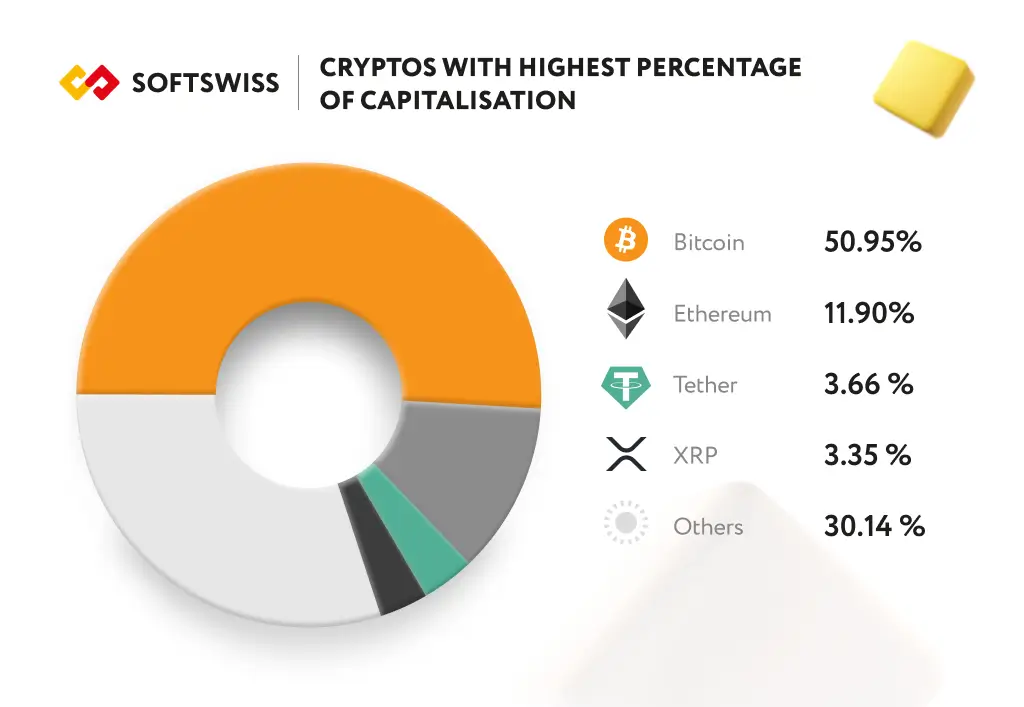
Most Popular Cryptocurrencies in 2026
At the moment of writing, there are around 10,000 cryptocurrencies in circulation. These are the most popular to date:
Bitcoin (BTC)
Ethereum (ETH)
Tether (USDT)
Binance Coin (BNB)
XRP (XRP)
U.S. Dollar Coin (USDC)
Solana (SOL)
Tron (TRX)
Zcash (ZEC)
Hyperliquid (HYPE)
*Data from: coinmarketcap.com *Values are subject to change.
*Data from: Coingecko.com *Values are subject to change.
9. Build the Crypto Casino Game Portfolio
When launching any type of casino – whether it’s a bitcoin casino or online casino – game availability is critical. It’s important to keep in mind that certain games and providers may not inherently support cryptocurrency payments. In this case, the SOFTSWISS Crypto Casino Solution is an excellent option that allows users to bet on games not originally designed for cryptocurrencies.
Consider including:
Slots with different volatility profiles and stakes
Blackjack, roulette, and other table games
Live casino where permitted and commercially justified
Quick-play or instant-win formats that suit mobile sessions
Provably fair games where the operator can explain and support the verification process
Here is a list of the most popular games that accept cryptocurrencies and the best providers supporting crypto as a payment method.
Top Crypto Game Providers
Provider
1
Pragmatic Play
2
BGaming
3
Hacksaw Gaming
4
Evolution
5
Endorphina
6
Platipus Gaming
7
Betsoft Gaming
8
Belatra Games
9
1spin4win
10
Clawbuster
Add Provably Fair Gaming
Provably fair gaming allows players to verify that a game result was generated according to a disclosed cryptographic process. A typical implementation uses a server seed, a client seed, and a nonce. The operator commits to the server seed by publishing or storing its hash before the game result is generated. After the result, the player can use the revealed seed and the relevant inputs to reproduce the calculation.
This mechanism can improve transparency and trust because the player does not have to rely only on the operator’s statement that an outcome was random. Provably fair verification lets players check in a bitcoin casino or a crypto casino, how a game result was generated and confirm the calculation themselves.
10. Design the Crypto Casino Website and User Experience
The frontend is the part of the crypto casino that players see and use, so it’s important to build a clear, responsive one. It includes the landing page, account area, game lobby, cashier, and withdrawal screens, and it’s important to consider mobile responsiveness as well.
Players who use cryptocurrency may expect a simple, app-like experience with quick access to their balance, games, payment options, and transaction status. The website should support a simple path from registration to gameplay and withdrawal:
Account creation and verification
Game browsing – searching, and filtering the portfolio
Payment method selection and deposit, with the asset and network both visible
A clear, real-time account balance visible during gameplay
Withdrawal requests with visible status tracking
Accessible customer support during any of the above steps
11. Player Acquisition Strategies for Crypto Casinos
Regarding marketing strategies, the main difference between crypto casinos and traditional casinos lies in how they acquire new players. Applying the same approach in both cases would be a grave mistake, potentially resulting in losing money without acquiring players.
Here are insights shared by SOFTSWISS experts that are worth considering when starting a crypto casino:
It is essential to consider that not all users of traditional online casinos are interested in playing at crypto casinos. Although they have benefits, crypto casinos demand specific knowledge and expertise that only some users are willing to acquire. Knowing how to find and choose the right sites to promote your crypto casino is essential for attracting the right users.
Using the most-searched casino review and affiliate sites as a communication channel can be a poor investment, as they are aimed at beginners or fiat casino users seeking bonuses or new online casinos. The audience for crypto casinos is more specific, with niche affiliate sites, forums, and communities.
Communication channels also play an essential role. Sharing knowledge, trends, or opportunities offered by crypto casinos can capture the interest of potential players. Chat platforms like Telegram or Discord are popular for discussions and information exchanges about cryptocurrencies.
These examples illustrate two methods to acquire players. Due to the dynamic nature of the market, crypto casinos' marketing strategies often involve trial and error.
Lessons From Crypto Casino Operations
Based on projects delivered since 2013, SOFTSWISS has observed several lessons from crypto casino operations:
Crypto is not the same as anonymity. Compliance requirements still apply, and players should understand when identity or transaction checks may be requested.
A crypto cashier is not enough. The platform must support network selection, confirmation monitoring, reconciliation, liquidity, and failure handling.
The largest currency list is not the best one. Each additional asset or network adds technical, operational, and compliance requirements.
Crypto players are not a uniform segment. Some prioritise speed, others stablecoins, privacy, game variety, trust, or access to local payment options.
Volatility requires a policy. Operators need limits, conversion rules, liquidity planning, and wallet controls before a major market movement occurs.
Crypto-only is not automatically more profitable. A hybrid casino may achieve stronger economics by combining the crypto segment with a broader fiat audience.
Key Takeaways On Launching a Crypto Casino
Starting a crypto casino can be a strong growth opportunity, but it requires expertise and rigorous preparation. Before committing to a budget:
Choose the right model: crypto-only or hybrid, based on your target markets and players.
Choose the right cryptocurrencies and blockchain networks: consider fees, reliability, player demand, and provider support.
Set up clear compliance processes: include KYC, AML, responsible gambling, and wallet controls.
Plan for financial risks: prepare for price changes, liquidity needs, and having enough funds to cover payouts.
Create a compliant marketing plan: reach a niche audience through the channels that best suit your business.
The SOFTSWISS Crypto Casino Solution helps operators combine crypto payments with a broader casino infrastructure. If you have a background in online gambling and understand the needs of crypto-first players, SOFTSWISS professionals will be happy to help you start your online crypto casino.
How much does it cost to start a crypto casino?
Costs depend on the licence, target markets, platform, games portfolio, payments, compliance, staffing, and acquisition. Plan the budget for the full first year, including an operating reserve, rather than only the website and licence fee.
How long does it take to launch an online casino with crypto payments?
There is no standard timeline. Licensing, integrations, game certification, KYC implementation, and payment testing can affect the schedule. Plan separate milestones for compliance approval, soft launch, and full commercial launch.
Do you need a gambling licence to accept cryptocurrencies?
Yes. Accepting cryptocurrency does not remove gambling licensing obligations. Operators must comply with target-market requirements and implement KYC, AML, responsible gambling, and reporting controls.
Is it better to launch a crypto-only or hybrid casino?
A hybrid model can offer greater flexibility by serving crypto-first players and those who prefer fiat payments. A crypto-only casino may provide clearer positioning, but it limits the audience and requires more targeted player acquisition.
Which cryptocurrencies and blockchain networks should operators support?
Operators should choose assets and networks based on player demand, processor support, liquidity, fees, confirmation times, compliance, and technical capacity. Select the asset and blockchain network separately. and display both clearly in the cashier to reduce payment errors.
How do crypto casinos handle KYC and AML requirements?
Operators use identity and age verification, sanctions screening, transaction monitoring, and risk-based reviews to meet regulatory requirements. Additional checks may apply to specific players or transactions, and cryptocurrency does not remove licensing or AML obligations.
How can operators reduce exposure to cryptocurrency volatility?
Operators can reduce exposure by setting treasury policies, holding part of their reserves in stablecoins or fiat, maintaining withdrawal liquidity, separating hot and cold wallets, setting limits, and monitoring currency exposure.
What software is needed for a crypto casino?
Casino management software, games or a game aggregator, crypto payment processing, wallet and reconciliation tools, KYC and AML solutions, responsible gambling features, reporting, customer support, and security monitoring.