
SOFTSWISS hosted a live panel to discuss how operators can navigate Latin America’s iGaming markets following Brazil’s recent ban on fixed-odds betting. Panellists said Brazil’s move should be seen as a warning for the wider region. They also discussed Mexico’s tax increase from 30% to 50% and the regulatory uncertainty facing operators.
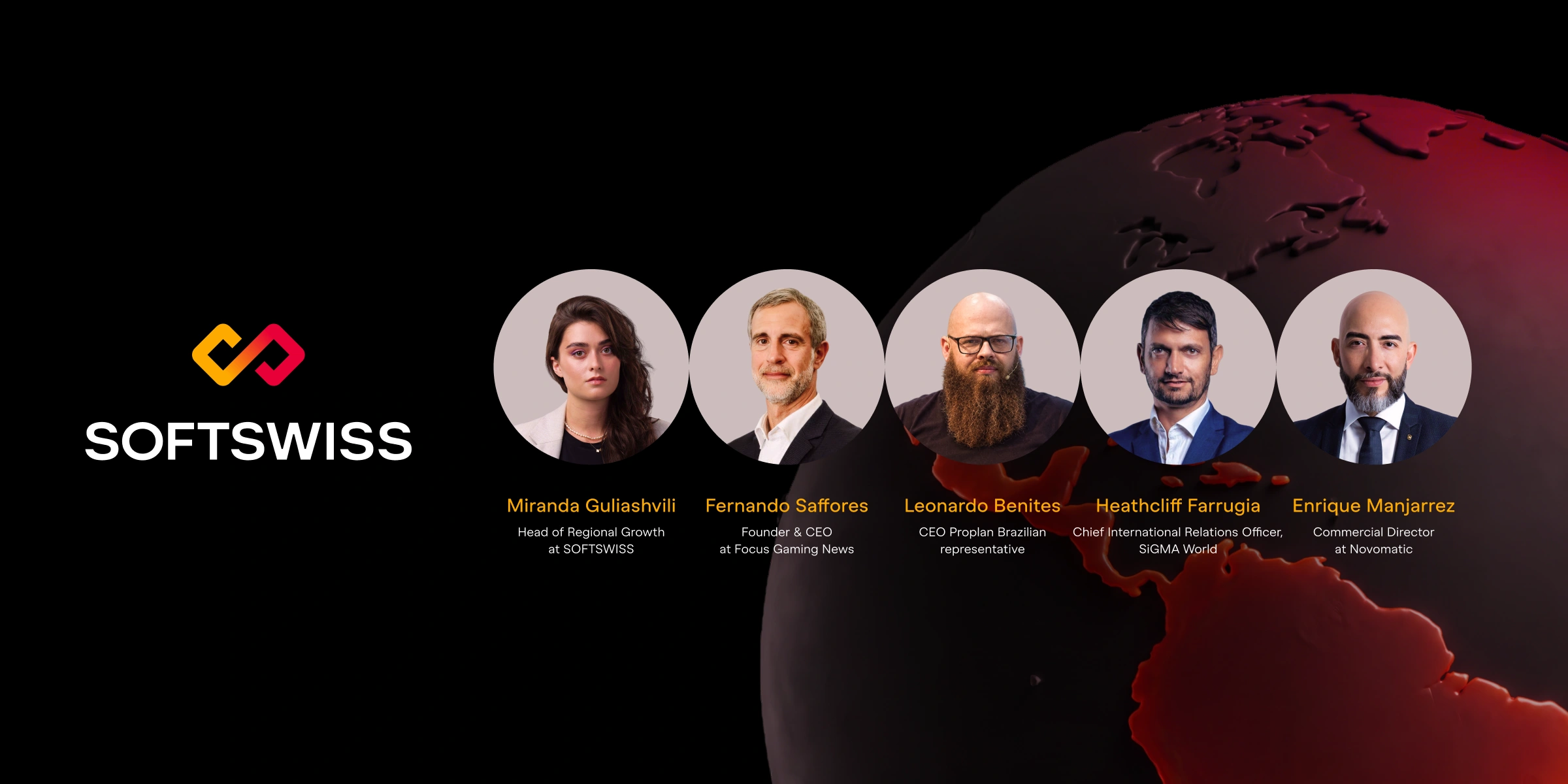
The panel was moderated by Miranda Guliashvili, Head of Regional Growth at SOFTSWISS and featured Leonardo Benites, CEO of Propane iGaming Agency and an expert on the Brazilian iGaming market; Fernando Saffores, Founder and CEO of Focus Gaming News; Enrique Manjarrez, Commercial Director at Novomatic; and Heathcliff Farrugia, Chief International Relations Officer at SiGMA World.
Panellists described Brazil as a warning for the region. They argued that restrictions do not remove player demand and may instead push activity towards unlicensed operators, reducing player protection and government tax revenue. Leonardo said the industry needs to engage with public opinion and explain its role before others define the debate.
![image]() What happened in Brazil happened because we let the government and the media tell our industry’s story. We never told our story.

Mexico highlighted another pressure on operators: panellists said the special tax on bets and sweepstakes (IEPS) rose to 50% from 2026, adding to the need to reassess market economics. The country’s gambling framework is based on the Federal Law on Games and Raffles, enacted in 1947, and implementing regulations introduced in 2004 and amended in 2023. While these regulations allow authorised establishments to accept bets online, they do not comprehensively cover the wider iGaming sector, contributing to the uncertainty operators and suppliers described.
Enrique Manjarrez said the tax change should prompt companies to reassess their commercial models, including how they balance player acquisition with retention and protection.
![image]() This is a warning, but not in a bad sense. It's a signal for suppliers to align their business model with operators and think about how to attract players. Many operators are just trying to acquire a lot of players. But what about player tracking? What about retaining players, informing them, protecting them, measuring the customer lifetime value?
The discussion’s broader message was that companies expanding across Latin America need to plan for regulatory shifts and work with local operators, associations and other stakeholders. A changing business environment makes market-specific planning and sustained industry dialogue essential.